Hangings
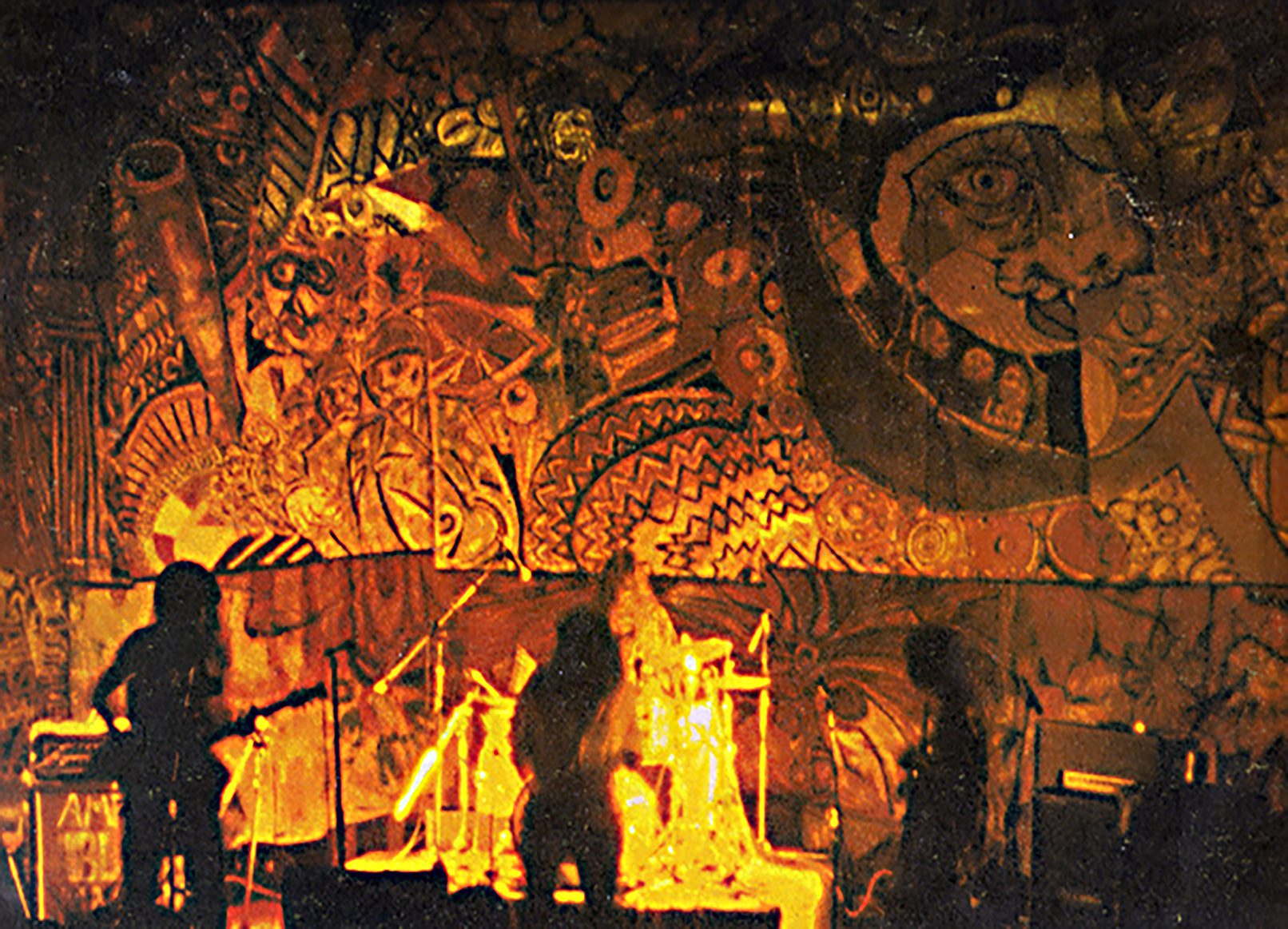
Band: The Moonflowers, Gloucester Guildhall, 1990
Between 1989 and 1993, I became immersed in Bristol’s independent music scene. It was during these years that I developed the large painted hangings shown on this Notes page. Originally created as temporary backdrops for live performances, these works became the starting point for an approach to making that has continued throughout my practice.
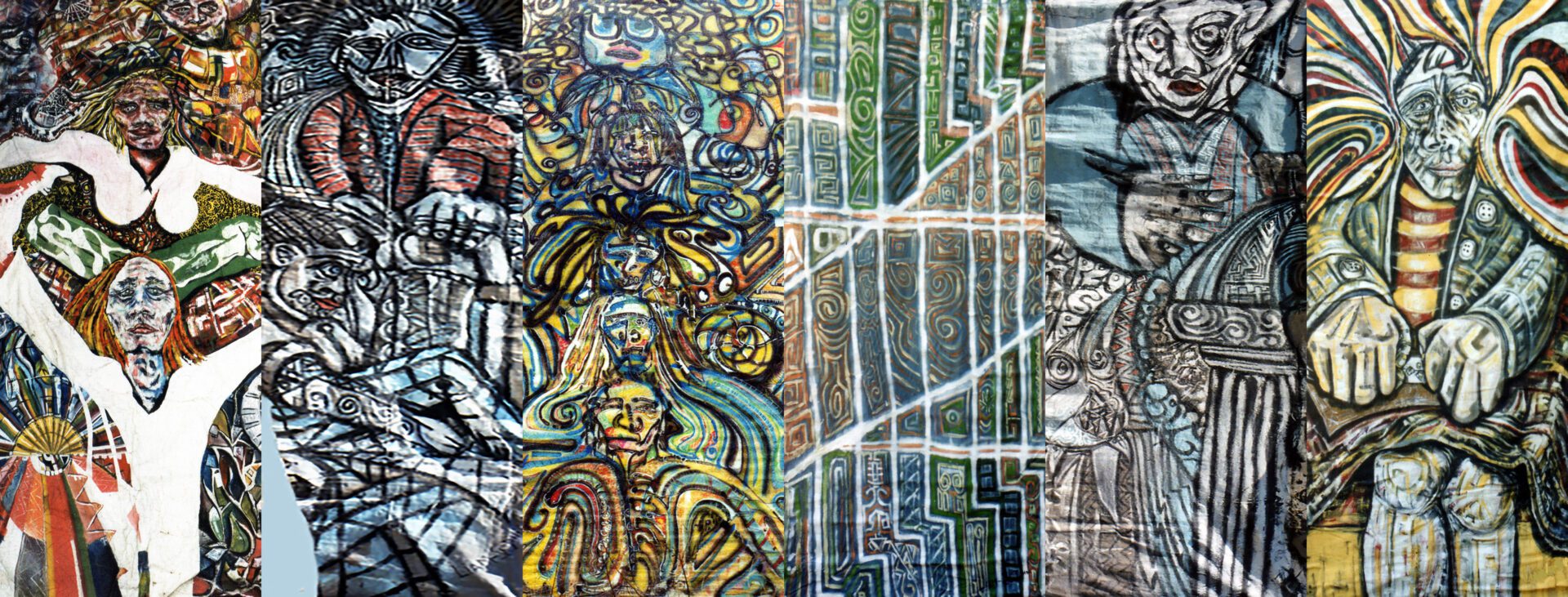
6 painted hangings, 1989 – 1991. Mixed media on fabric. Approx. 3 × 1 m each.
My first collaboration was with the Bristol band The Moonflowers, a psychedelic, indie, funk band. As the relationship developed, the paintings grew increasingly ambitious, expanding in both scale and abstraction. Rather than simply illustrating the music, the hangings evolved into immersive environments that transformed performance spaces. Alongside them, I developed multi-projector light shows, creating constantly shifting visual installations that responded to the atmosphere and energy of each event.
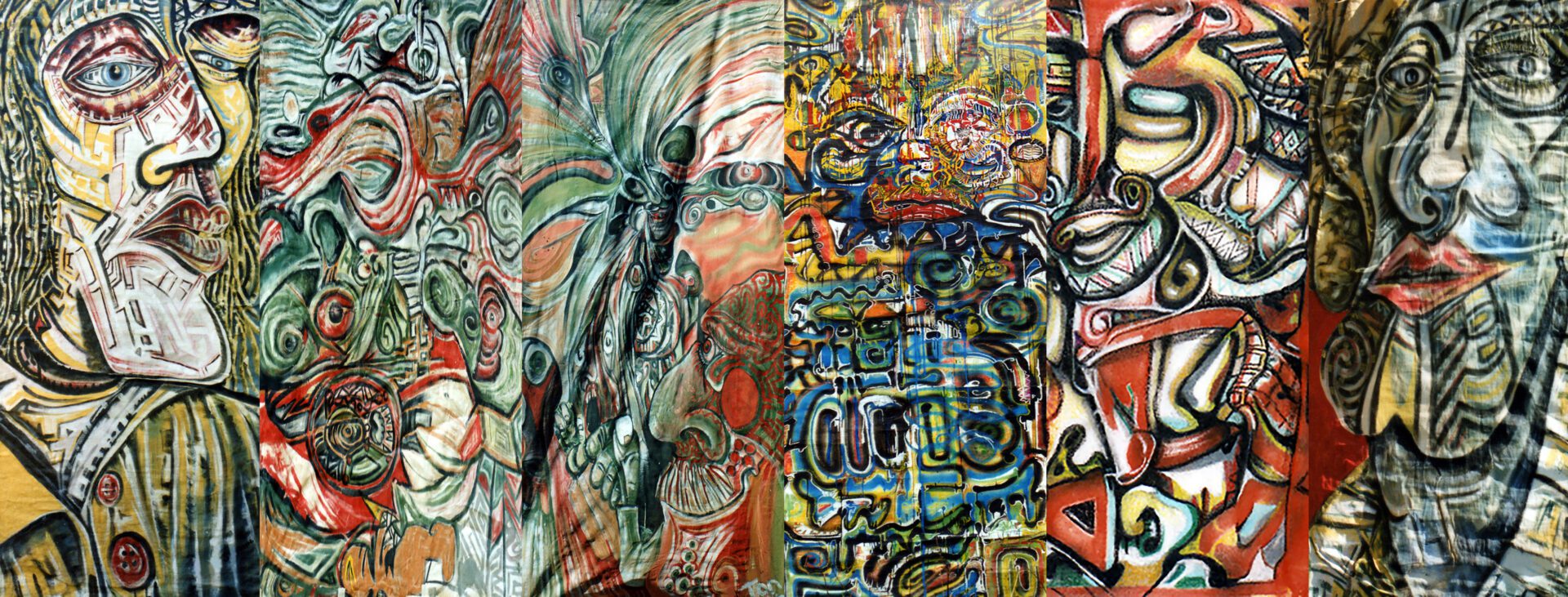
6 painted hangings, 1989 – 1991. Mixed media on fabric. Approx. 3 × 1 m each.
Everything was made through improvisation. There was almost no budget, so the work evolved from whatever materials could be found. Old curtains, bedsheets, and discarded fabrics became the canvases. Paint was rescued from skips, donated by friends, or salvaged from decorating jobs, and occasionally even consisted of highly toxic automotive paints. If it had colour, it was likely to be used. Financial limitations became part of the creative process, encouraging invention rather than restricting it.
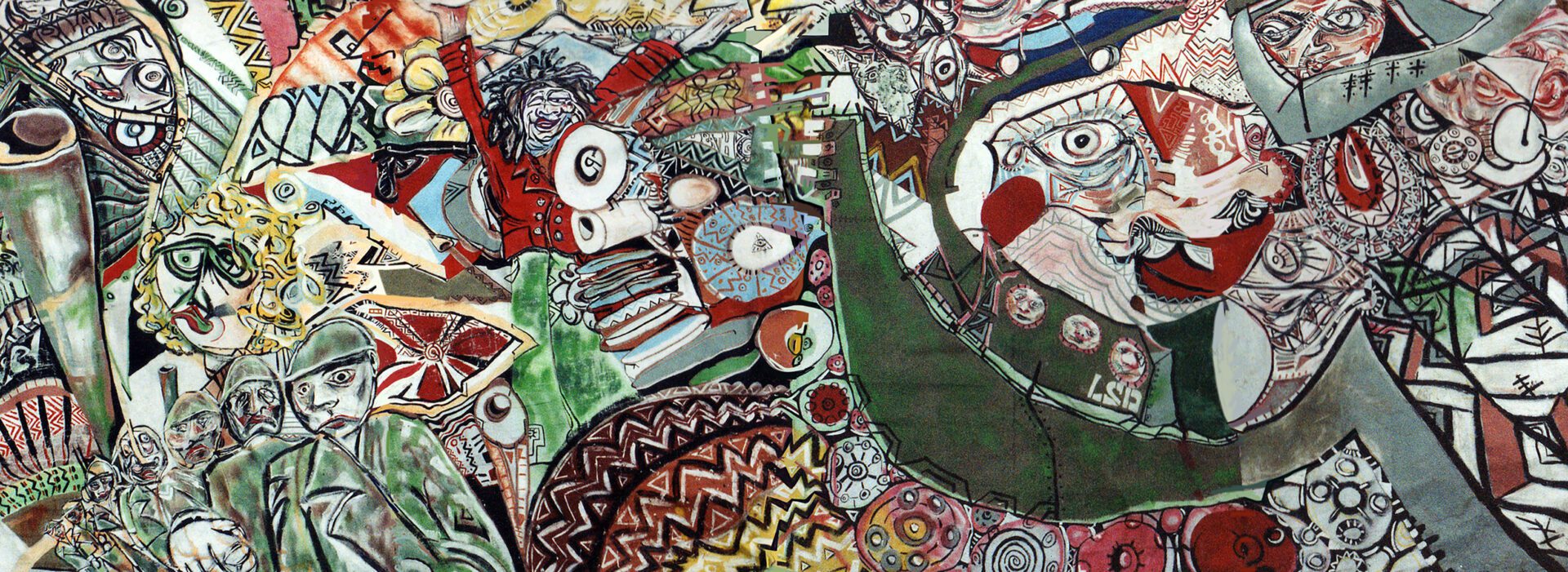
Irish tour Hanging, 1990. Mixed media on fabric. Approx. 3 × 20 m.
As the work became more widely known, I began producing visual installations for other bands, club nights, festivals, and events throughout Bristol, eventually touring across the UK and into Europe. The hangings and projection systems became larger, more complex, and increasingly technical, yet they retained the same spirit of experimentation and collaboration that had defined the earliest works. Later on, I worked alongside visual artist Pete Smith, further developing the use of projected imagery within these live visual environments. In many ways, the work reflected the Bristol music scene itself—resourceful, collaborative, and constantly experimenting on a shoestring budget.
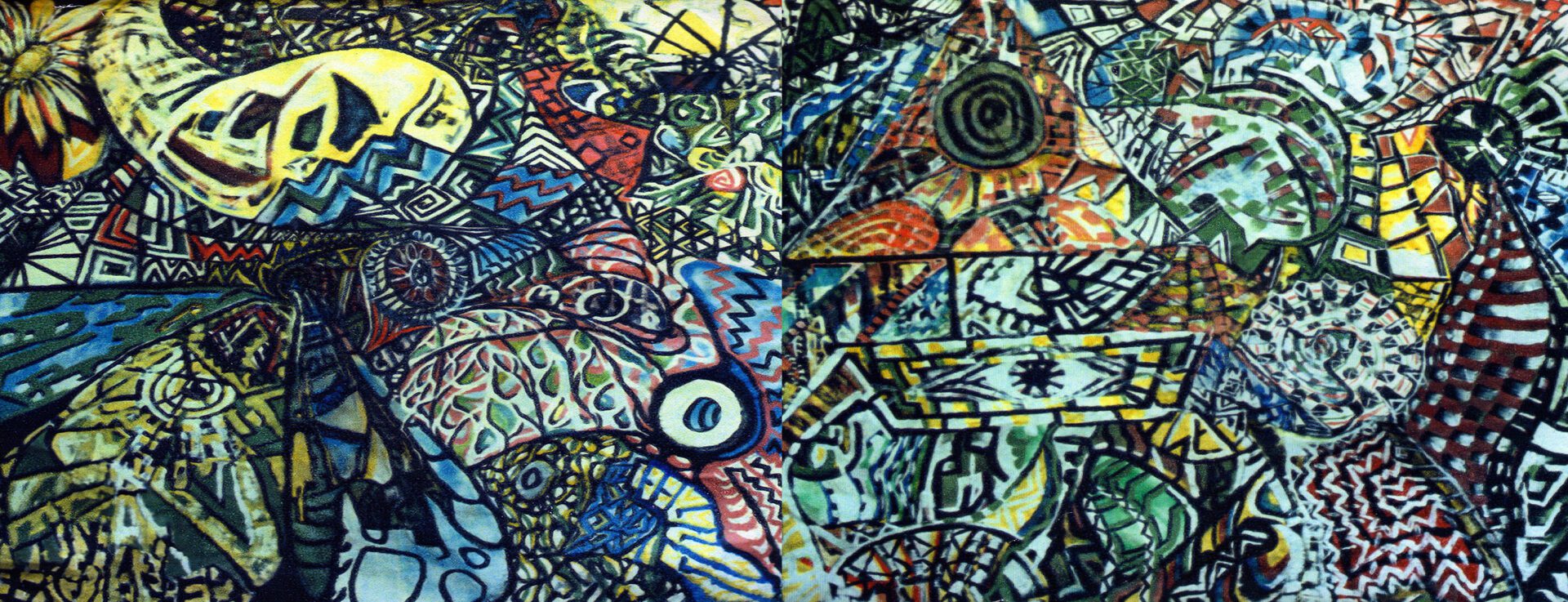
Band: Nautical William hanging, 1990. Mixed media on fabric. Approx. 2 × 4 m.
Looking back, it is remarkable that after hundreds of performances there were no serious fires. The painted hangings themselves were highly flammable, while bands such as The Moonflowers were well known for regularly setting themselves on fire with lighter fluid during performances. Safety standards were, to put it mildly, rather different at the time. The paintings shown here represent only a small selection of the original works. Many were damaged, lost, or simply given away after years of touring and use. Their temporary nature reflected the environment in which they were created, made for live events rather than galleries and intended to exist within the energy of a particular performance rather than as permanent objects.
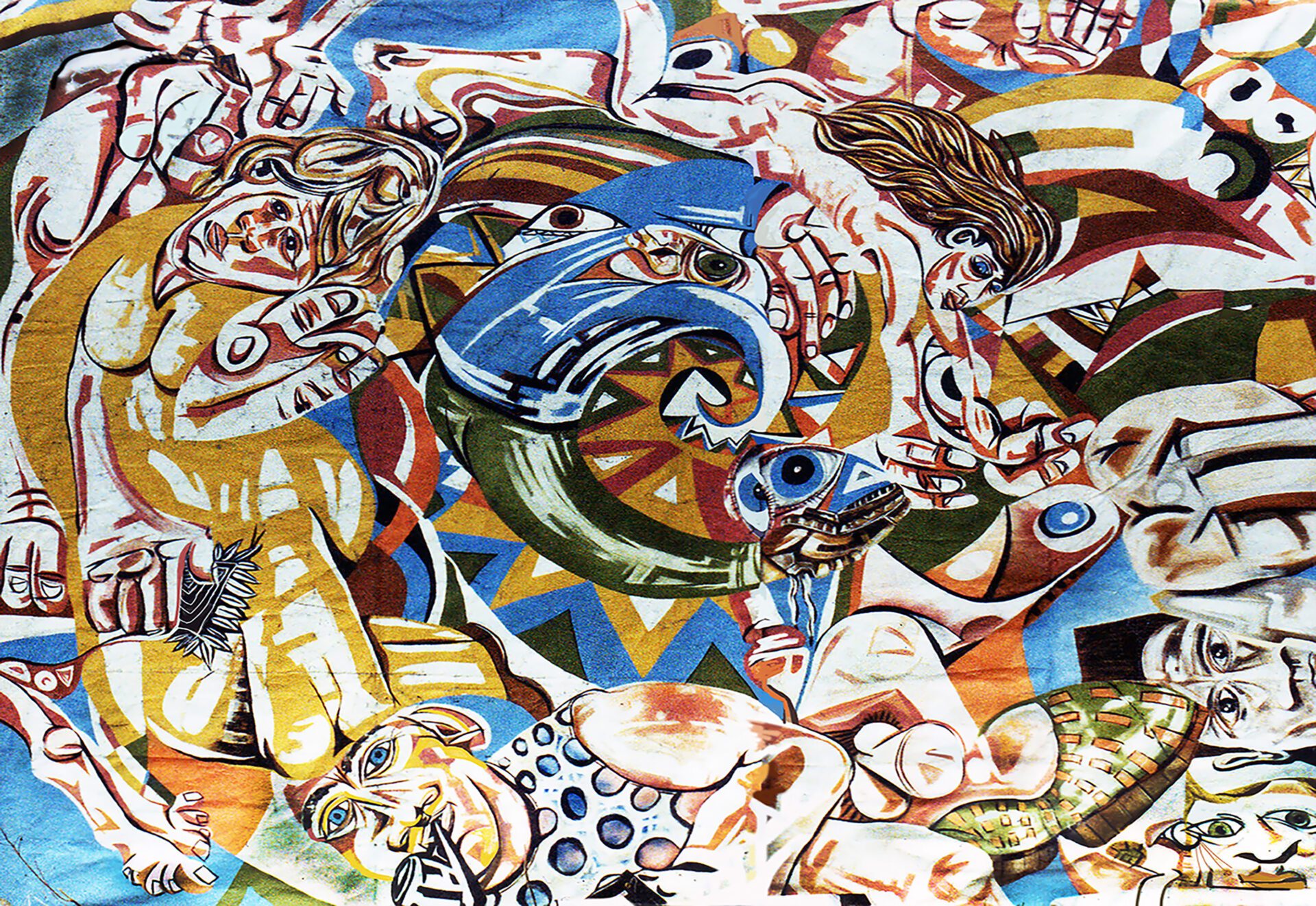
Regent street hanging, 1991. Mixed media on fabric. Approx. 3 × 4 m.
This period also marked the beginning of my continuing interest in the human form, with friends and everyday experiences becoming recurring subjects alongside the abstract works. More importantly, these years established an approach based on collaboration, improvisation, found materials, and the transformation of ordinary spaces into immersive visual experiences—ideas that have continued to shape my work in performance, installation, drawing, photography, and painting.
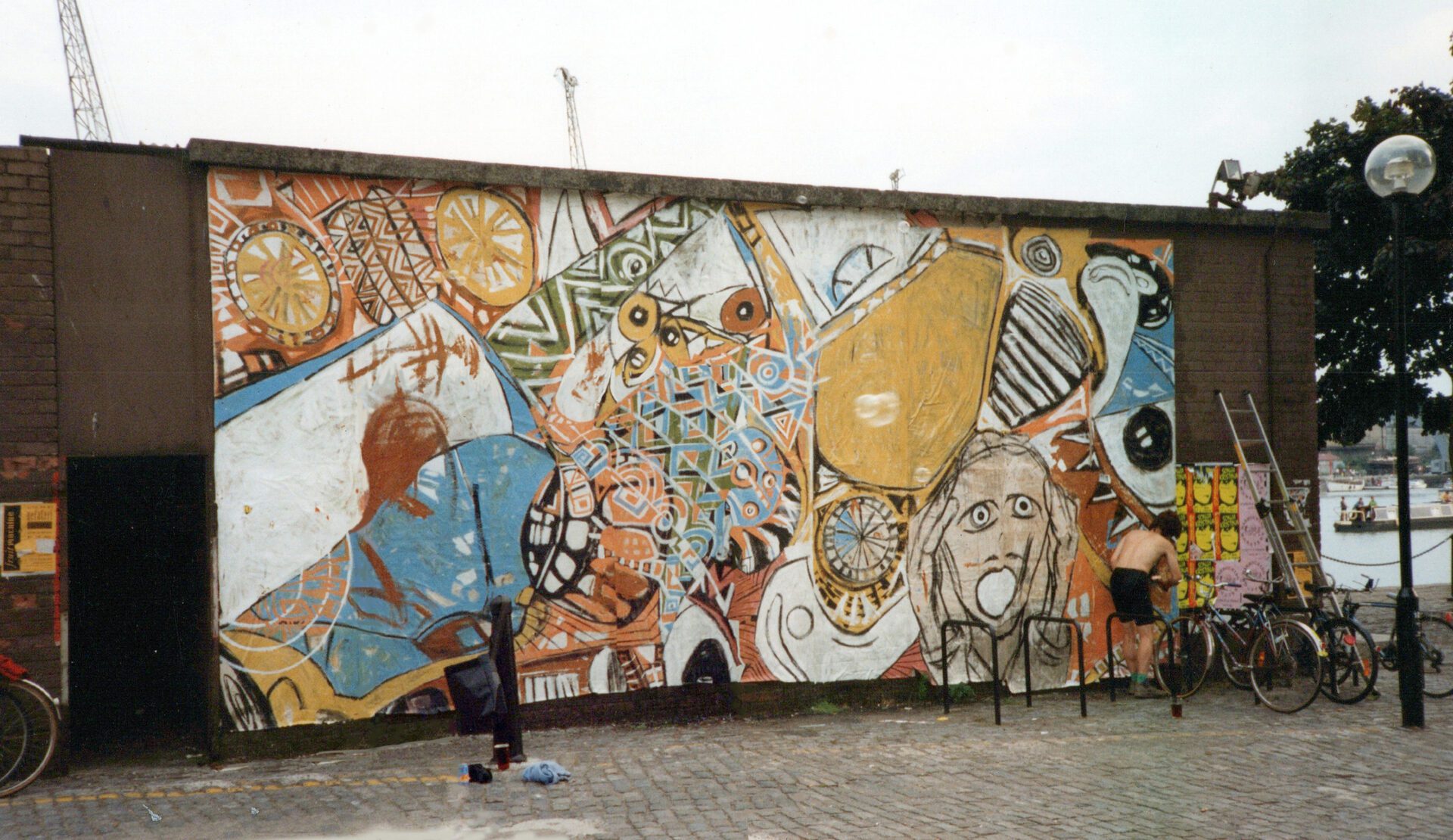
Car Scream, 1991. Paint on paper. Arnolfini bin shed, Bristol.
At the same time, I also began extending my work beyond music venues and into the streets of Bristol. In 1991, working with the artist Heath Bunting, I created an unsanctioned public artwork on the bin store beside the Arnolfini art gallery. Based on Edvard Munch’s The Scream, the mural commented on the increasing dominance of the motor car within the city.
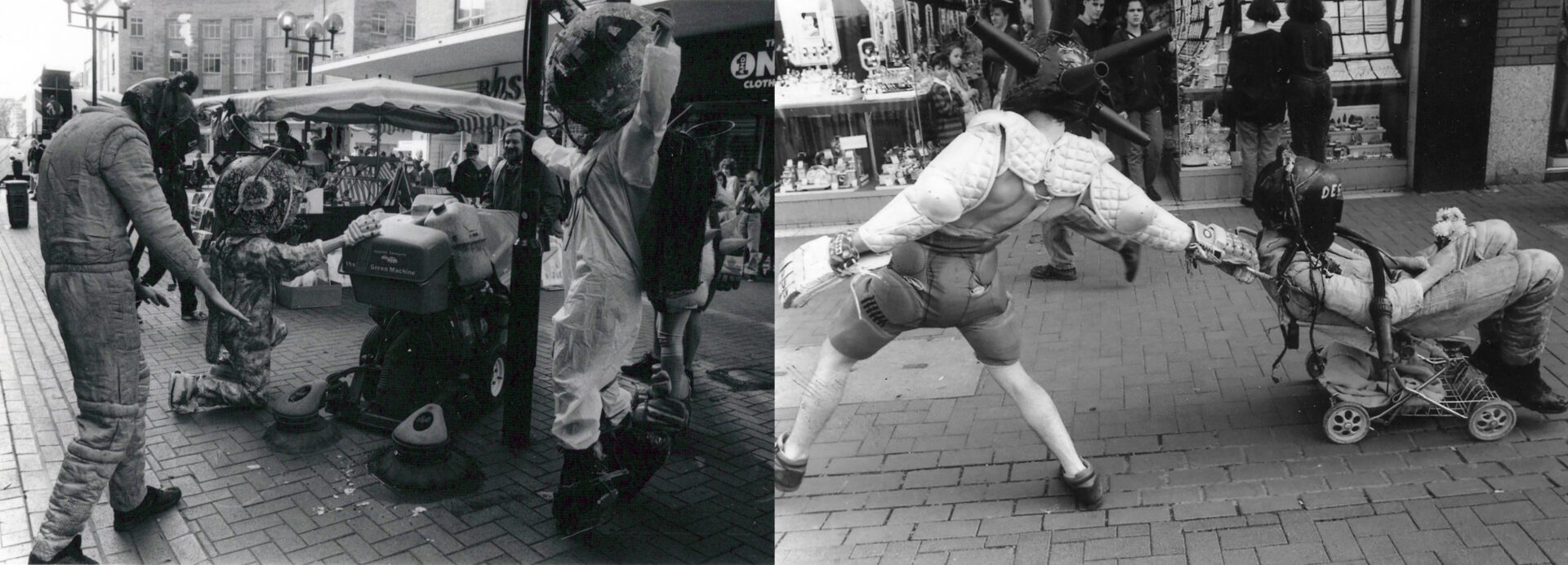
Bristol · Space people · 1993 · Photo: Dr. Gabriella Rivera
At this stage I was less interested in exhibiting within galleries than in taking art directly to people. Music venues, club nights, festivals, and public spaces became my exhibition spaces, where audiences encountered the work as part of a shared social experience rather than within the conventions of a gallery. The emphasis was on participation, atmosphere, and creating environments that people could inhabit rather than simply observe. Towards the end of my time in Bristol these ideas developed further as I began introducing performative elements into my practice. I created characters that roamed the streets, extending the work beyond painted environments and into direct public encounters.
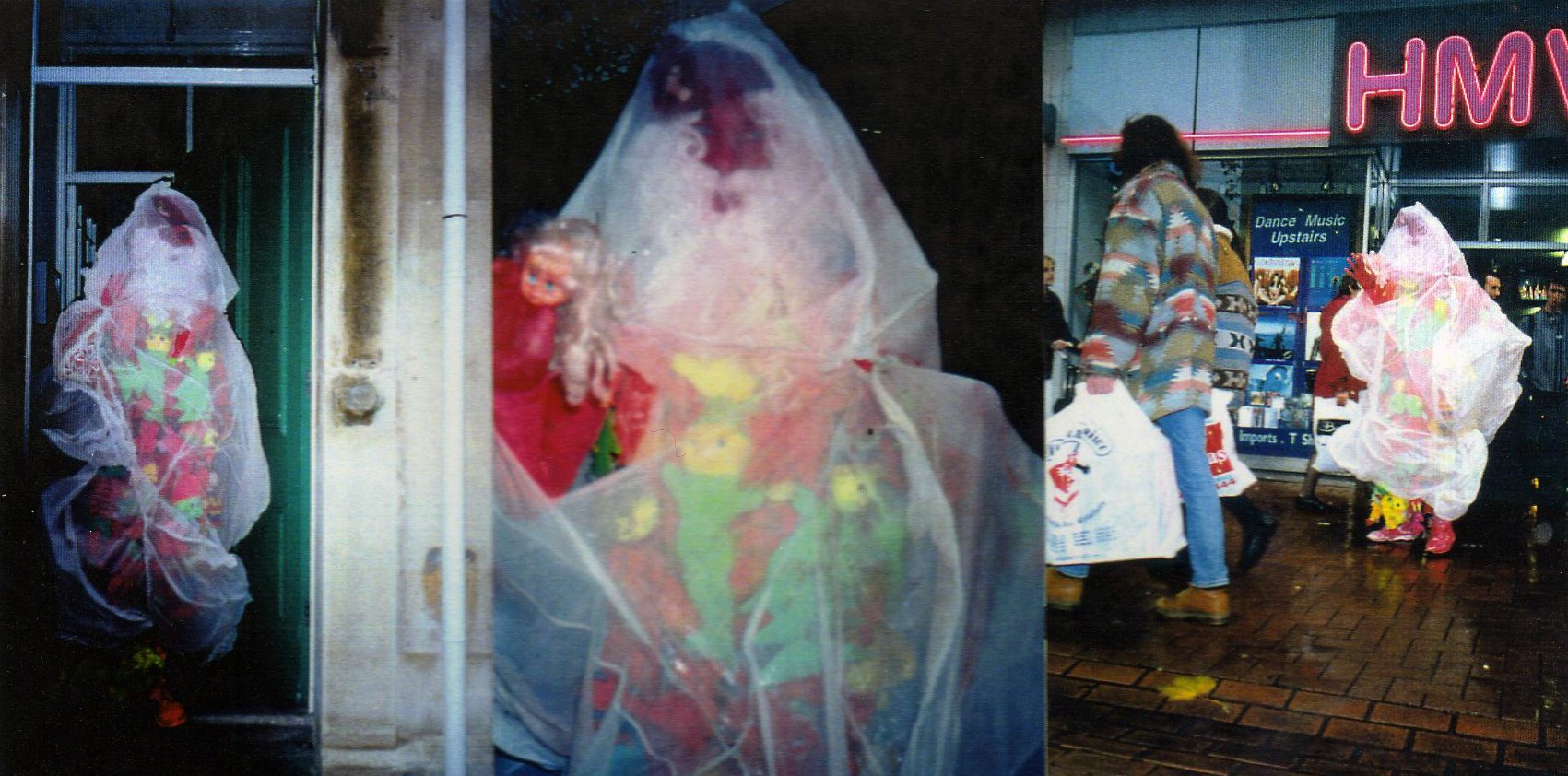
Bristol · Bringing Father Christmas · 1995 · Photo: Pete Smith
The belief that art could exist outside traditional exhibition spaces and should meet people where they already were became a defining principle of my later practice. This approach resurfaced throughout my performance work during the 1990s and has remained a consistent thread running through my work ever since. Although the materials, contexts, and forms have changed over time, the underlying intention has remained the same: to create work that engages directly with people and everyday experience, inviting unexpected encounters beyond the conventions of the gallery.
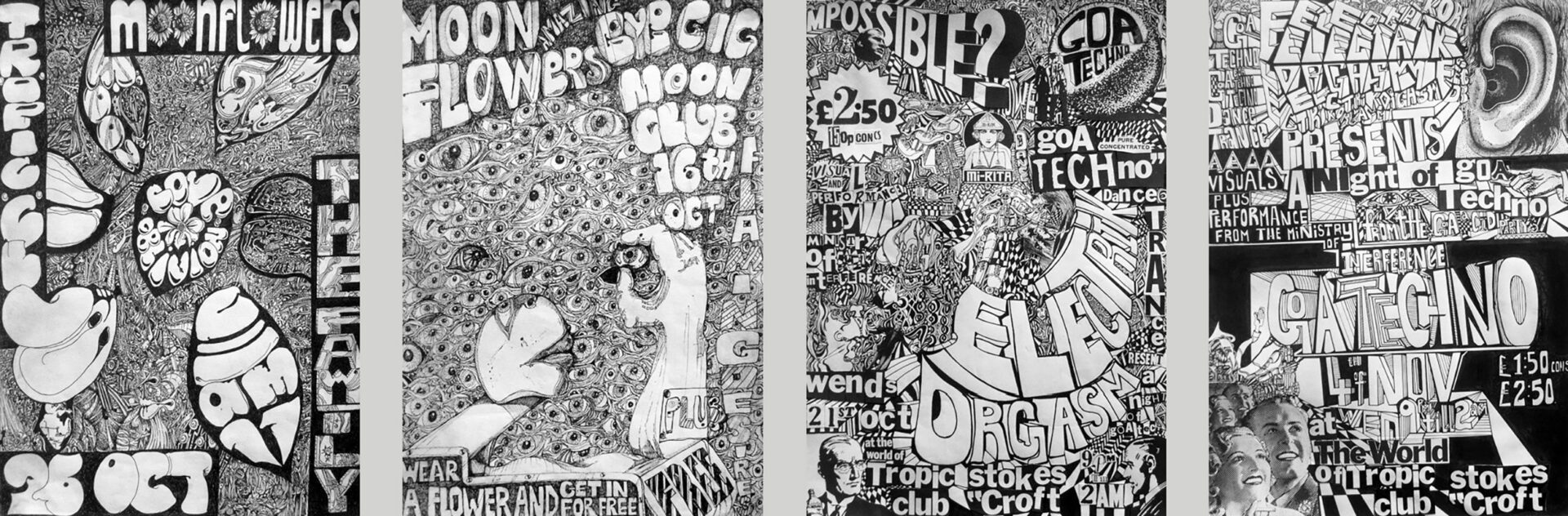
A selection of hand drawn / collage posters for gigs and club nights. 1989 – 1992